
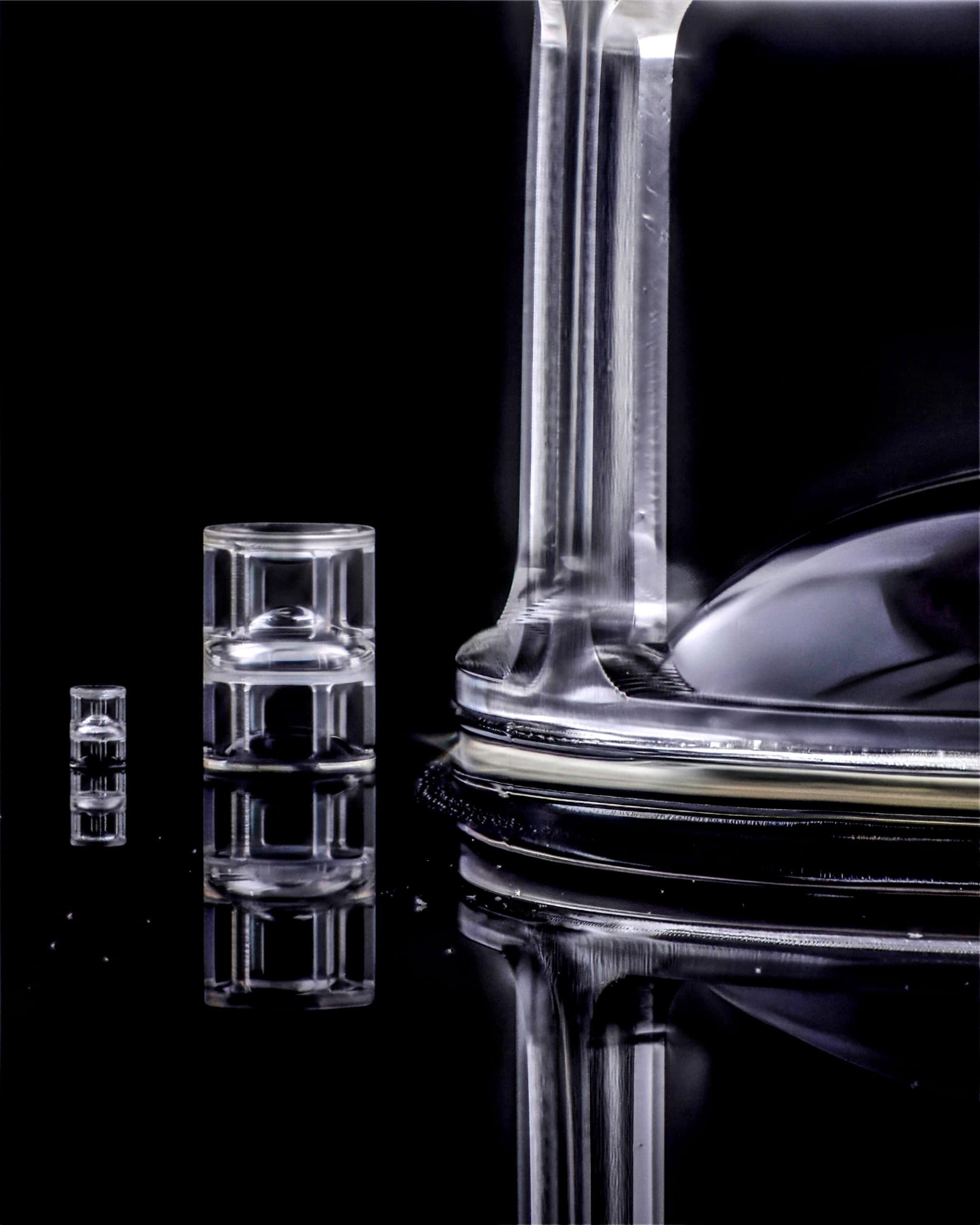
Optics printed directly onto the tip of an optical fibre — collimators, beam shapers and imaging elements aligned to the core with sub-micron precision.
- Substrate
- SM / MM fibre, bundles
- Alignment
- < 1 µm to core
- Surface roughness
- < 10 nm RMS

Competence in 3D-Printed Micro-Optics
Custom micro-optics, printed precisely.Design, development and fabrication of custom micro-optical components — printed directly onto glass, image sensors, LEDs and fibre tips.
Nothing here is off the shelf. Each family describes a class of problem we solve — the actual geometry, substrate and tolerances come from your requirements.
Product field
Tap a family for details · 01 / 04Select a family · 01 / 04
Optics printed directly onto the tip of an optical fibre — collimators, beam shapers and imaging elements aligned to the core with sub-micron precision.
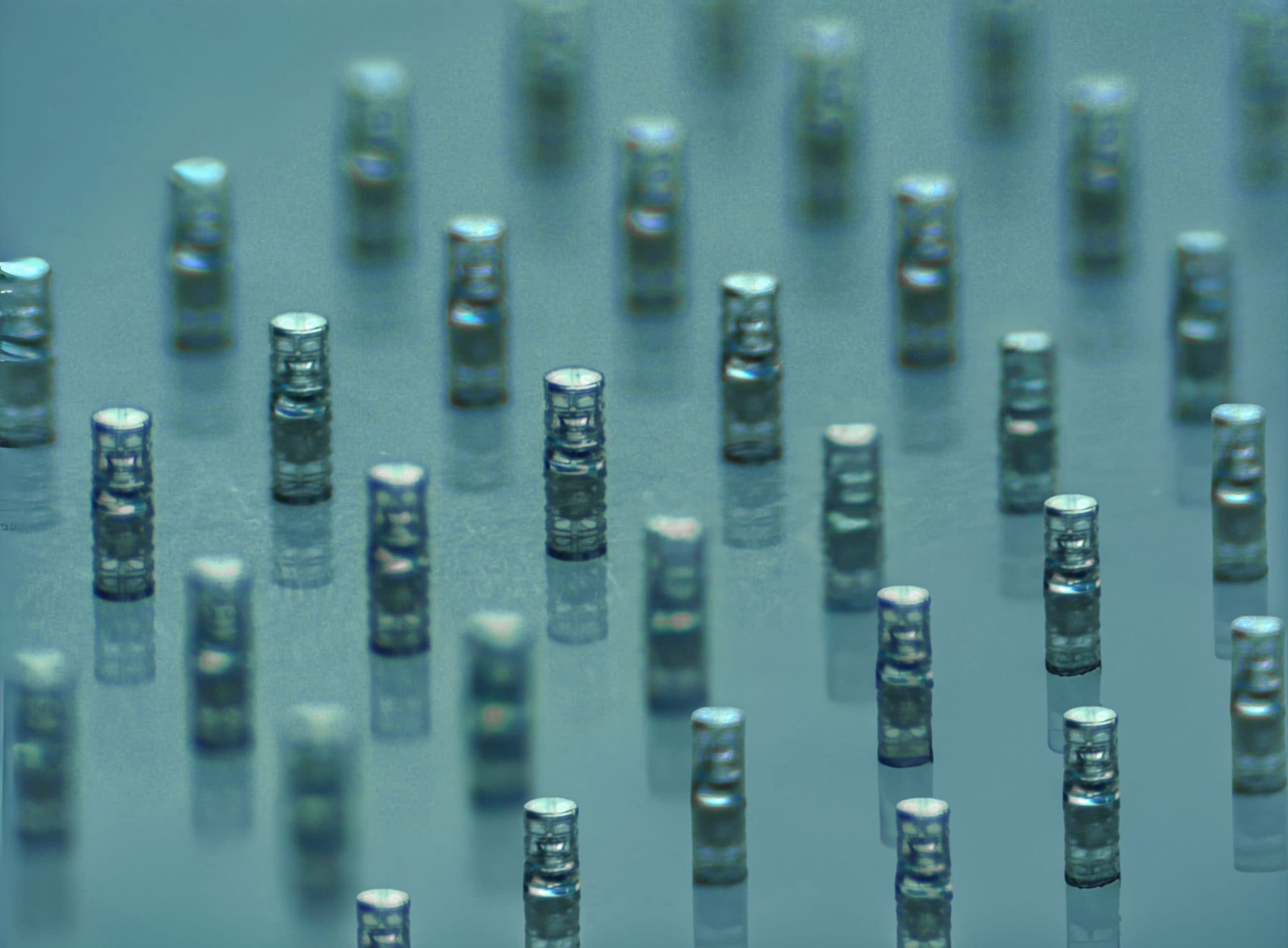
Freeform lenses, prisms and multi-surface elements with complex geometries that conventional manufacturing cannot reach.
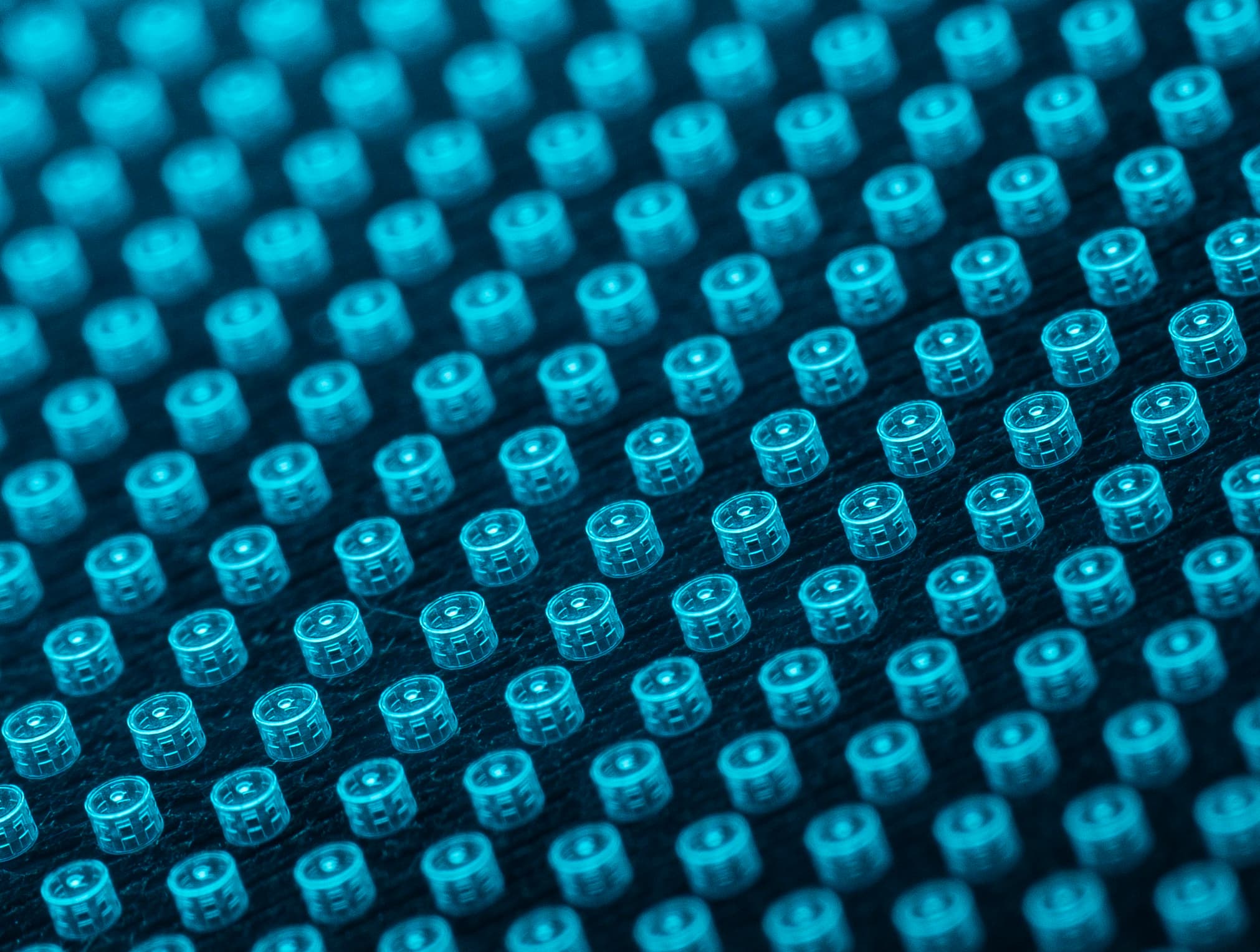
Arrays with freeform shapes, high aspect ratios and up to 100 % fill factor. Unit cells from 3 µm to 2 mm, with variable pitch across the field.
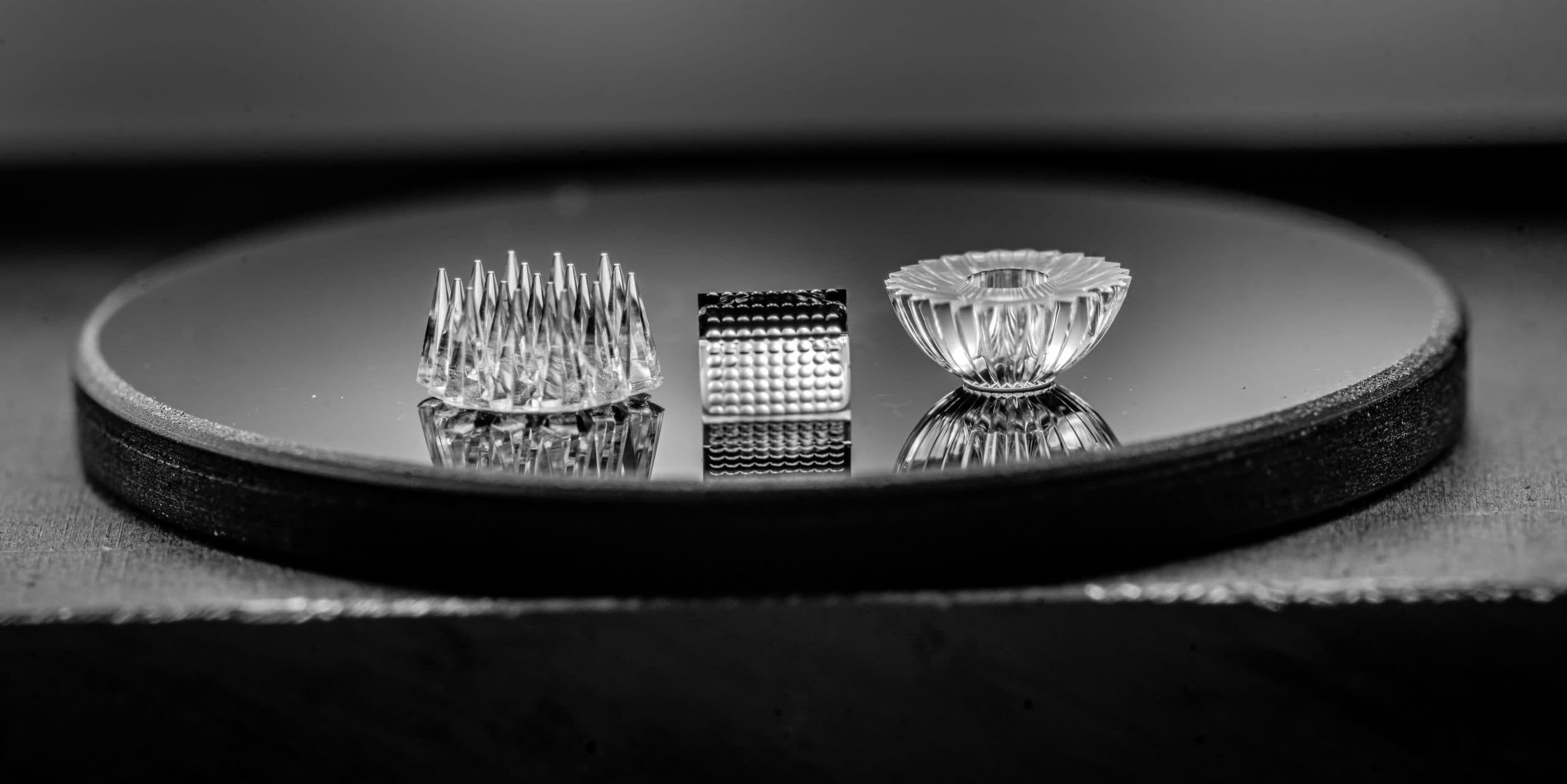
Complete multi-element objectives at millimetre scale — for endoscopy, machine vision and miniaturised imaging systems.
Optical family
Optics printed directly onto the tip of an optical fibre — collimators, beam shapers and imaging elements aligned to the core with sub-micron precision.
Optical family
Optical family
Optical family
The process window we work inside, drawn from our product flyers. Bring us a specification and we will tell you plainly whether it falls inside it.
Engage us for the complete chain, or for the single stage you are missing. A finished design that needs printing is as welcome as a blank sheet.
01
PrintOptix process
Complex multi-surface freeform design for 3D-printable optics, supported by wave-optical simulation, diffractive elements, freeform holograms, optimization algorithms and full tolerancing.
02
PrintOptix process
The supporting structure around the optically active parts, customized to your requirements and shaped to the constraints of the printing process.
03
PrintOptix process
Ten years of process experience applied to tuning manufacturing parameters, so the finished part actually delivers the performance the design promised.
04
PrintOptix process
Printing on glass slides, silicon wafers, image sensors, fibre tips and LEDs. The substrate can be swapped — or the component supplied with no substrate at all.
05
PrintOptix process
Surface measurement and optical performance testing against the design specification, so every part ships with data behind it.
PrintOptix brings geometry, fabrication and integration into one workflow — replacing the hand-offs and compromises conventional optics require.
The PrintOptix advantage
Six constraints, one integrated system
A direct team for custom micro-optics — from the first brief to validated parts.
Meet PrintOptix
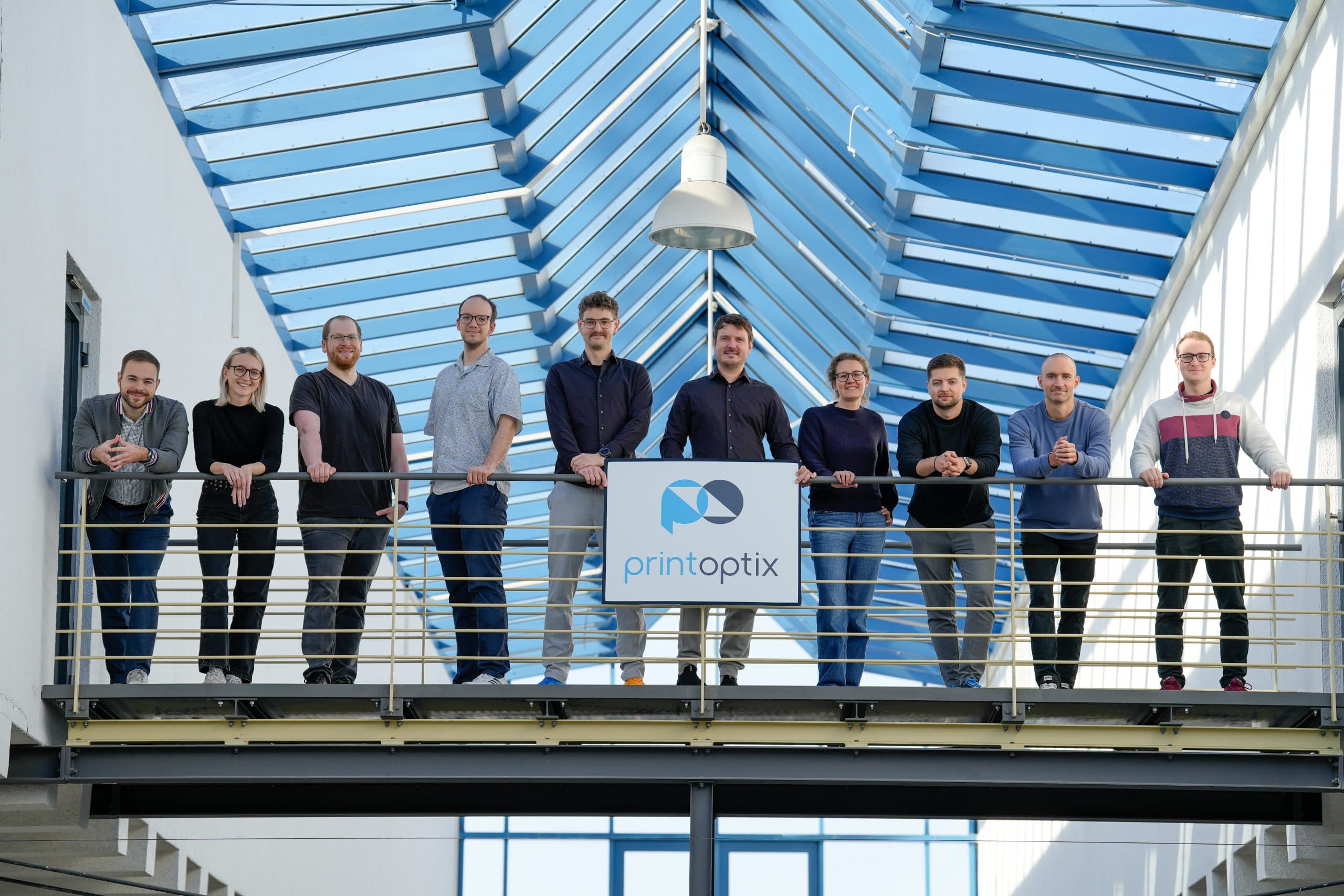
We connect optical design, micro-fabrication and integration, so your project moves forward with clarity.
Design · Fabrication · Integration
10+
Years in micro-optics
2 wks
Idea to production
<1 µm
Alignment accuracy
100 %
Array fill factor
Join us in Yokohama to explore what custom 3D-printed micro-optics can make possible.

Event briefing
See fibre-tip optics, freeform arrays and micro-objective lenses — and discuss your next optical challenge directly with us.
Yokohama, Japan / 2026
Planning to attend? Reserve time with our team in advance.
Supported by
Partners and programmes supporting the next generation of micro-optics.